BM reform has been a topic in healthcare policy circles for years. The reasons are well-documented: spread pricing, rebate retention, formulary manipulation, and conflicts of interest from vertical integration.
Read More
BM reform has been a topic in healthcare policy circles for years. The reasons are well-documented: spread pricing, rebate retention, formulary manipulation, and conflicts of interest from vertical integration.
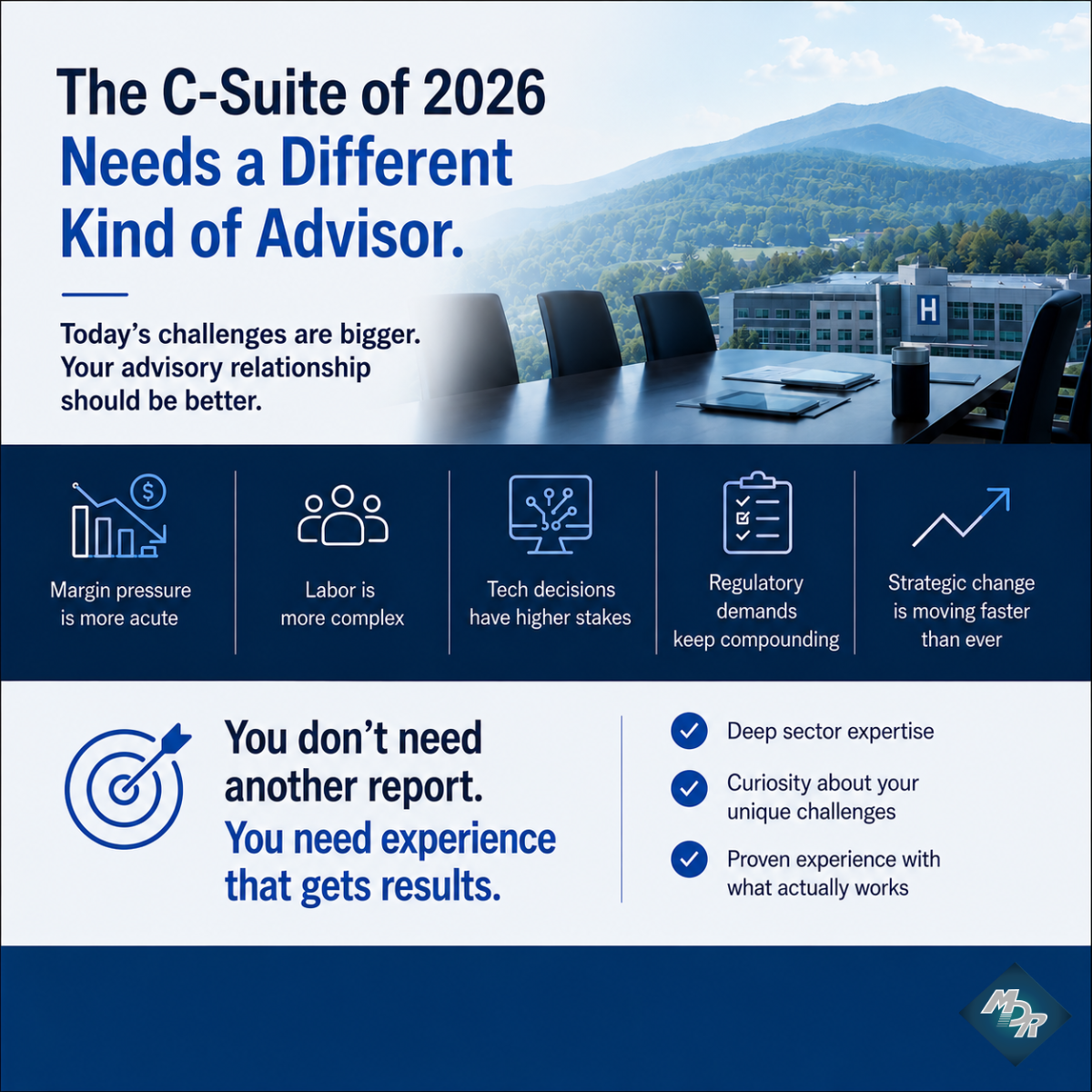
Read MoreThe problems healthcare executives are navigating today aren't the same problems they faced five years ago. Margin pressure is more acute. Labor is more complex. Technology decisions have higher stakes. Regulatory demands keep compounding.
Read MoreMore than 700 rural hospitals are at risk of closure in the United States. The financial and operational pressures are real — reimbursement shortfalls, workforce gaps, aging infrastructure, and patient volume that doesn't support full-service operations.
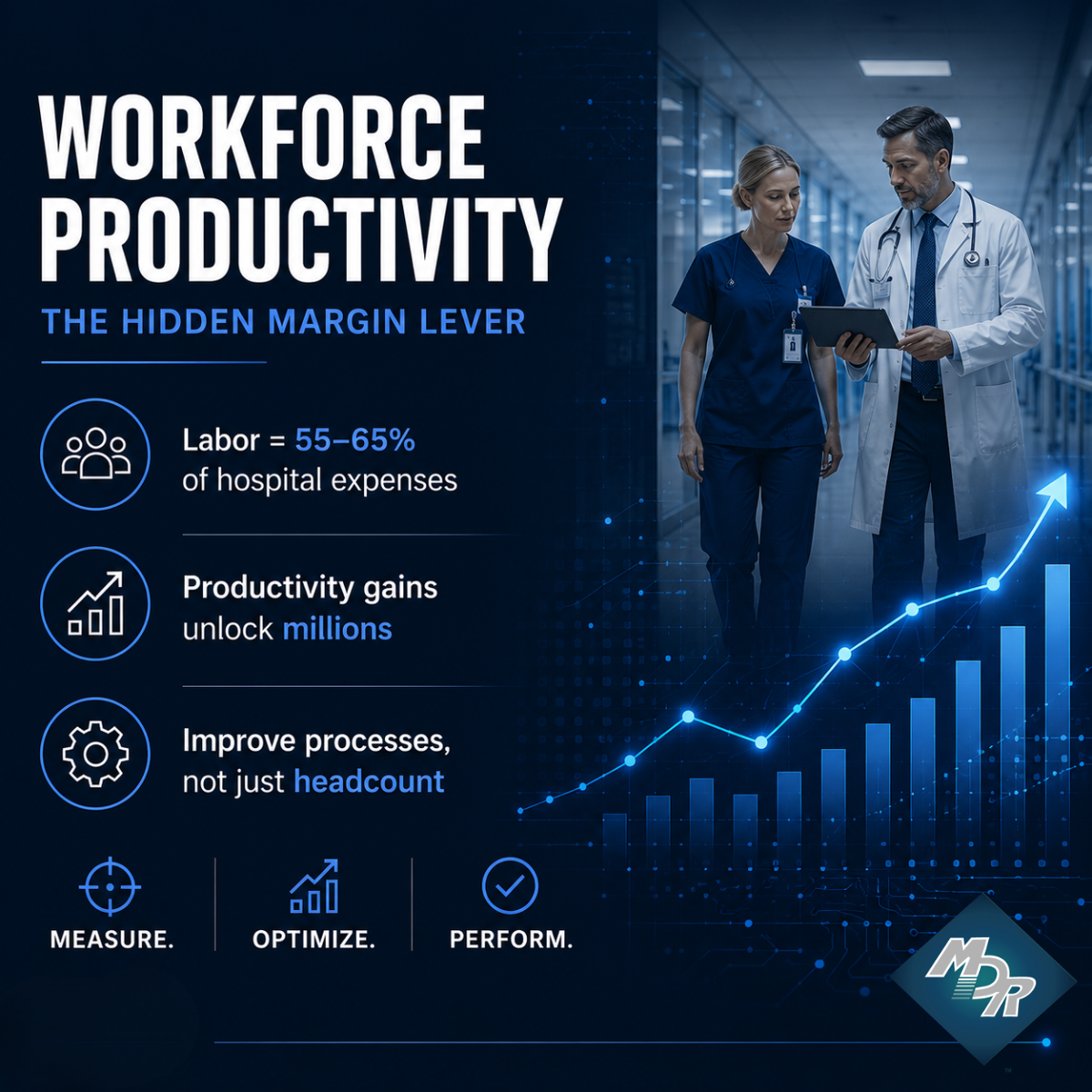
Read MoreLabor is 55–65% of a hospital's operating expense. Most cost conversations default to headcount: where can we cut, which positions can we eliminate.
Read MoreWhen you're genuinely working in the interest of your client — not your next engagement, not your upsell opportunity — you make different recommendations. You share the hard truths. You walk away from work that isn't the right fit.
Read MorePayers have invested heavily in AI that identifies claims to deny or reduce — faster, more accurately, and at greater scale than ever before. Most provider revenue cycle teams are still working with largely manual processes on the other side of that equation.
Read MorePharmacy is one of the most complex — and most underleveraged — financial assets in a health system.
Most CFOs and CNOs think about pharmacy primarily as a cost center. The health systems that have transformed their financial performance tend to think about it differently: as an enterprise asset with meaningful revenue potential.
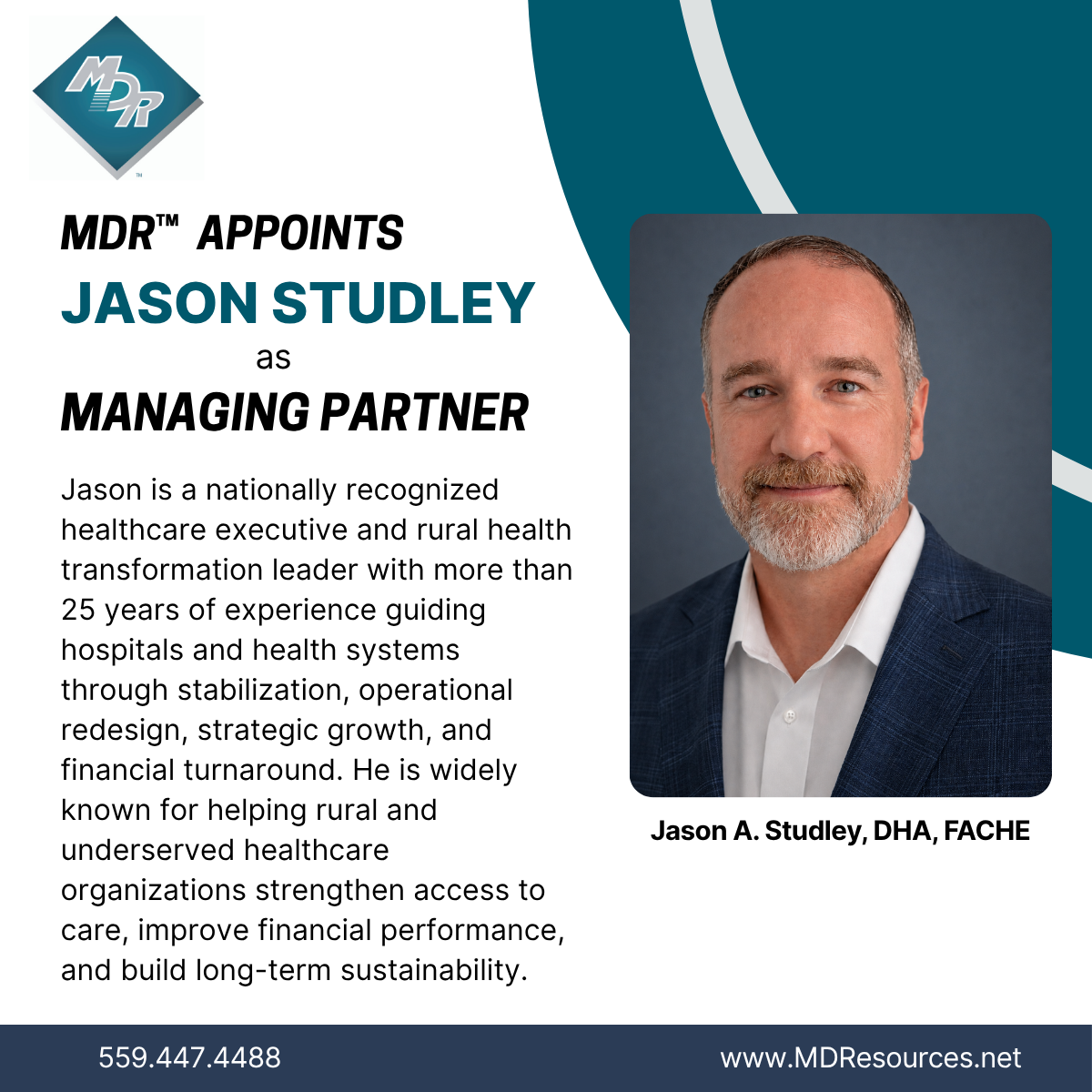
Read MoreJason A. Studley, DHA, FACHE, is a nationally recognized healthcare executive and rural health transformation leader with more than 25 years of experience guiding hospitals and health systems through stabilization, operational redesign, strategic growth, and financial turnaround. He is widely known for helping rural and underserved healthcare organizations strengthen access to care, improve financial performance, and build long-term sustainability.
Read More